Monday, April 3, 2023

ROD SERLING IS MONUMENTAL


Binghamton, New York was Rod Serling's hometown and they are honoring his memory with a life-size statue of the influential writer. See links below if you want to support this worthy endeavor.

Check back later today for more of The Twilight Zone!


They're Building a Monument to Twilight Zone Creator Rod Serling
By Scott Collura | March 29, 2023 | ign.com

When The Twilight Zone debuted almost 64 years ago, creator Rod Serling, his prodigious imagination notwithstanding, couldn't have fathomed the impact the show would have on the medium of television and the bigger pop culture landscape. And yet here we are, living in a world where a Twilight Zone marathon every New Year's holiday is not just expected, but has become our God-given right! The series has influenced an untold number of writers, directors, creators, and fans with its sci-fi/fantasy/horror stories that were often thinly hidden parables about the world we live in.

And now, a Rod Serling monument is being planned for the legend's hometown of Binghamton, New York. A Kickstarter is underway with the goal to "recognize Rod Serling's love for his hometown, and immortalize his impact as a writer, teacher, orator, and humanitarian, by creating and installing a six-foot statue in his beloved Recreation Park."

Fans will recall the episode of The Twilight Zone where a disaffected businessman returns to his hometown -- as well as his own past -- and the carousel in a local park which represents some of his fondest memories.

"The plan is to install the statue in Recreation Park, which is about seven blocks from Rod’s boyhood home, and which has been recognized as one of the main inspirations for the Twilight Zone episode 'Walking Distance,'" says Nicholas Parisi, who is the president of The Rod Serling Memorial Foundation. "The carousel that Rod rode as a boy, and which inspired a pivotal scene in 'Walking Distance' is still in that park. There is no place more appropriate for Rod’s statue to be placed."

Parisi explains that erecting a statue of Serling in Binghamton has been a goal of the Foundation for years. Last summer, a New York State grant was secured to cover most of the cost of the statue, but the Kickstarter is intended to cover additional costs, including creating, shipping, and installing the statue and its base, and prepping the grounds where the statue will stand.

"The Foundation was founded in 1985 by a group of Rod’s friends, including his former teacher and mentor Helen Foley," says Parisi. "She really spearheaded the idea that Rod Serling’s work was worth preserving and promoting."

Serling, who died at the age of 50 in 1975, was an award-winning pioneer of early television writing who also scripted radio shows, plays, and movies. But he'll always be best-remembered for The Twilight Zone, which of course he also hosted for the original show's five seasons. (There have been multiple follow-up series in the decades since.)

"Rod Serling was almost certainly the most prolific writer in television history, with nearly 250 scripts produced, and he is the only writer to win six Emmy awards for best dramatic writing," says Parisi. "Three of his Emmys were awarded prior to the Twilight Zone and one was awarded afterward, which is evidence of just how monumental his career was - he was about much more than just the Twilight Zone."

Indeed, his live television plays like Patterns, Requiem for a Heavyweight, and The Comedian remain hallmarks of TV history, while his contributions to the big screen include the likes of the classic political thriller Seven Days in May (about an attempted coup of the US government) and a little movie called Planet of the Apes.

"Rod Serling and the Twilight Zone are still relevant because the themes that Rod dealt with are timeless, whatever package in which they may have been presented," says Parisi. "Themes like longing for an idyllic past, the importance of recognizing human dignity, the need to oppose racism and prejudice, these are themes that (sometimes sadly) do not go out of style."

If you'd like to help out with the campaign, head over to rodserlingmonument.com or rodserling.com.

Sunday, April 2, 2023

SCREAM OF THE ASPARAGUS REVISITED


You may remember my post from last year about the Swiss making claims to allow the dignity of plants along with other living things. Now an Israeli scientist has made recording of plants making sounds under stress that have gone previously unheard because they cannot be detected by the human ear.

So, just remember the next time you're out in the garden with your pruning shears that the flowers you're trimming are, at the very least . . . reacting.


Plants Really Do 'Scream' Out Loud. We Just Never Heard It Until Now.
By Michelle Starr | March 31, 2023 | Sciencealert.com

It seems like Roald Dahl may have been onto something after all: if you hurt a plant, it screams.

Well, sort of. Not in the same way you or I might scream. Rather, they emit popping or clicking noises in ultrasonic frequencies outside the range of human hearing that increase when the plant becomes stressed. This, according to scientists, could be one of the ways in which plants communicate their distress to the world around them.

"Even in a quiet field, there are actually sounds that we don't hear, and those sounds carry information. There are animals that can hear these sounds, so there is the possibility that a lot of acoustic interaction is occurring," explains evolutionary biologist Lilach Hadany of Tel Aviv University in Israel.

"Plants interact with insects and other animals all the time, and many of these organisms use sound for communication, so it would be very suboptimal for plants to not use sound at all."

Plants under stress aren't as passive as you might think. They undergo some pretty dramatic changes, one of the most detectable of which (to us humans, at least) is the release of some pretty powerful aromas. They can also alter their color and shape.

These changes can signal danger to other plants nearby, which in response boost their own defenses; or attract animals to deal with the pests that may be harming the plant.

However, whether plants emit other kinds of signals – such as sounds – has not been fully explored. A few years ago, Hadany and her colleagues found that plants can detect sound. The logical next question to ask was whether they can produce it, too.

To find out, they recorded tomato and tobacco plants in a number of conditions. First, they recorded unstressed plants, to get a baseline. Then they recorded plants that were dehydrated, and plants that had had their stems cut. These recordings took place first in a soundproofed acoustic chamber, then in a normal greenhouse environment.

Then, they trained a machine learning algorithm to differentiate between the sound produced by unstressed plants, cut plants, and dehydrated plants.

The sounds plants emit are like popping or clicking noises in a frequency far too high-pitched for humans to make out, detectable within a radius of over a meter (3.3 feet). Unstressed plants don't make much noise at all; they just hang out, quietly doing their plant thing.

By contrast, stressed plants are much noisier, emitting an average up to around 40 clicks per hour depending on the species. And plants deprived of water have a noticeable sound profile. They start clicking more before they show visible signs of dehydrating, escalating as the plant grows more parched, before subsiding as the plant withers away.

The algorithm was able to distinguish between these sounds, as well as the species of plant that emitted them. And it's not just tomato and tobacco plants. The team tested a variety of plants, and found that sound production appears to be a pretty common plant activity. Wheat, corn, grape, cactus, and henbit were all recorded making noise.

But there are still a few unknowns. For example, it's not clear how the sounds are being produced. In previous research, dehydrated plants have been found to experience cavitation, a process whereby air bubbles in the stem form, expand and collapse. This, in human knuckle-cracking, produces an audible pop; something similar could be going on with plants.

We don't know yet if other distress conditions can induce sound, either. Pathogens, attack, UV exposure, temperature extremes, and other adverse conditions could also induce the plants to start popping away like bubble wrap.

It's also not clear whether sound production is an adaptive development in plants, or if it is just something that happens. The team showed, however, that an algorithm can learn to identify and distinguish between plant sounds. It's certainly possible that other organisms could have done the same.

In addition, these organisms could have learned to respond to the noise of distressed plants in various ways. "For example, a moth that intends to lay eggs on a plant or an animal that intends to eat a plant could use the sounds to help guide their decision," Hadany says. For us humans, the implications are pretty clear; we could tune into the distress calls of thirsty plants and water them before it becomes an issue.

But whether or not other plants are sensing and responding is unknown. Previous research works have shown that plants can increase their drought tolerance in response to sound, so it's certainly plausible. And this is where the team is pointing the next stage of their research.

"Now that we know that plants do emit sounds, the next question is – 'who might be listening?'" Hadany says. "We are currently investigating the responses of other organisms, both animals and plants, to these sounds, and we're also exploring our ability to identify and interpret the sounds in completely natural environments."

Saturday, April 1, 2023

ATTACK OF THE SCI-FI SOUNDTRACKS!


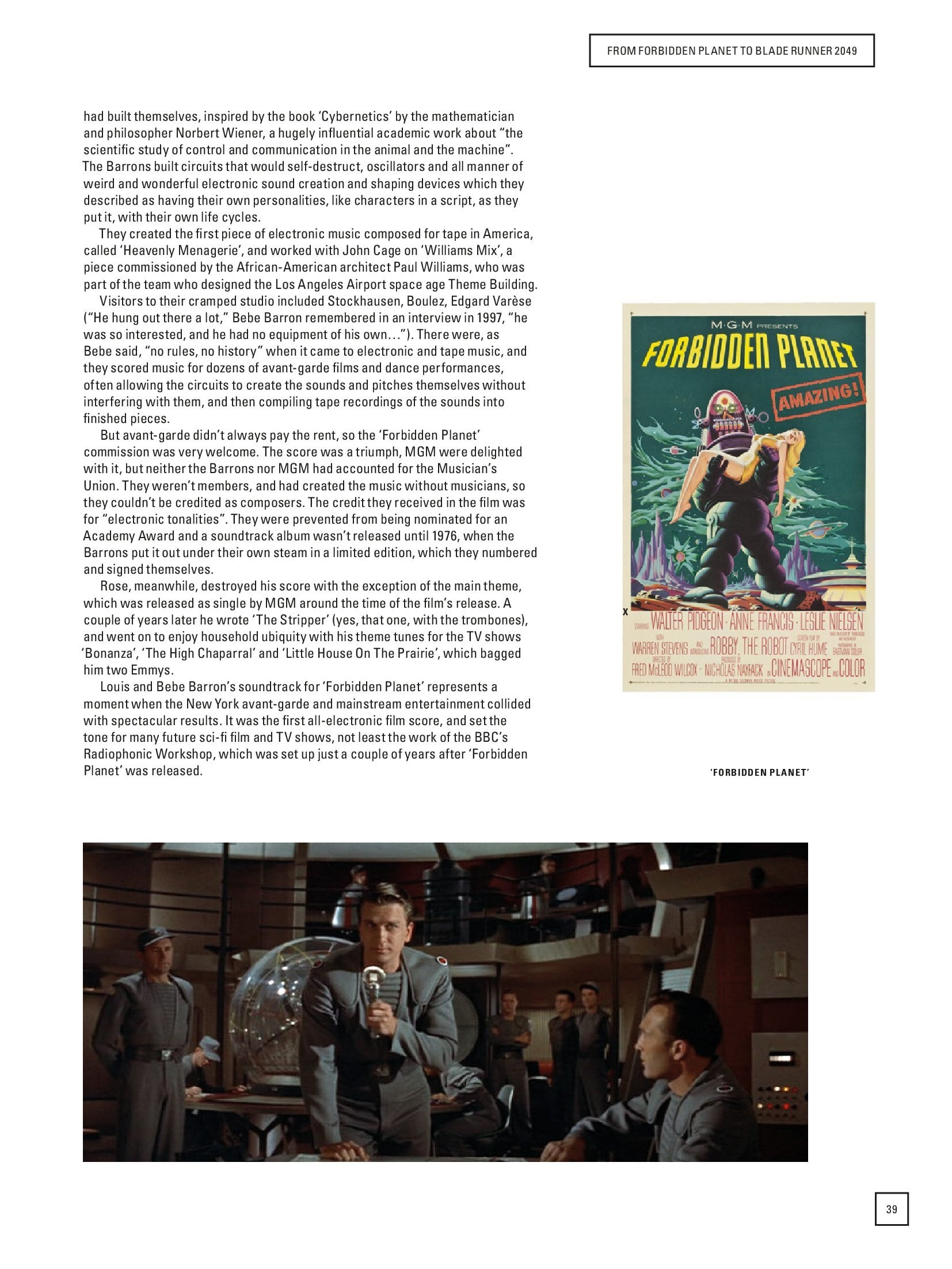
"Louis and Bebe Barron's soundtrack for 'Forbidden Planet' represents a moment when the New York avant-garde and mainstream entertainment collided with spectacular results."
- Mark Roland, Electronic Sound

Audiences didn't know it at the time, but in 1961, when they saw THE DAY THE EARTH STOOD STILL at their local theater, they were watching what would become one of the greatest science-fiction movies ever filmed. They also experienced an otherworldly soundtrack made with what was then a largely unknown device called the theremin. Invented by science wizard Leon Theremin, the unassuming box on a stand with what looked like two TV antennas sprouting from it created some of the weirdest sounds to ever come out of a musical instrument. Composed by Academy Award-winner Bernard "Psycho" Herrmann, it was the perfect sonic backdrop for Robert Wise's cautionary tale.

This was, however, not the first time the theremin had been heard in a genre film (the first time it was used for a soundtrack was in the 1930 Russian film ODNA); it was employed a decade earlier in 1951 by composer Dimitri Tiomkin for THE THING FROM ANOTHER WORLD, and Jack Arnold's IT CAME FROM OUTER SPACE (1953, with the score supervised by Joseph Gershenson). It has since been used a multitude of times whenever a touch of the eerie is needed.

As soundtracks evolved into more sophisticated arrangements, experimental, atonal and random electronic sounds were replaced by orchestral synthesizer pads and ambient washes (there are exceptions, of course), with notable contributions by artists such as Tangerine Dream and Vangelis. Rock music began to be used extensively as well and it's not uncommon these days to hear a rock song being played at the beginning or during a film.

We have to go back to the 1940's for the origins of the first all-electronic film score. Music graduates and Greenwich Village residents Louis and Bebe Barron were seriously interested in creating electronic sounds. When they married, they received a tape recorder from Louis' cousin for a present which was highly likely the only one anybody owned in New York City at the time.

The first tape recorders were secretly developed in Nazi Germany during WW II, so that officials could record Hitler's speeches and replay them to the public. At the end of the war, the U.S. seized the technology and developed it further in the States.

Along with oscillators and other electronic equipment, the Barron's used their recorder to tape their compositions for playback. In fact, they are considered the first to ever record electronic music to tape, a composition titled, "Heavenly Menagerie". Over the next few years, the couple composed scores for avant-garde films and dance performances for New York's artistic elite.

In 1955 they were approached by MGM to provide their oddly creative music for their new science-fiction film, FORBIDDEN PLANET. The Barron's were happy to comply, especially because they needed the money! The movie was released in 1956 with the first-ever all-electronic film score. The rest, as they say, is cinema history.

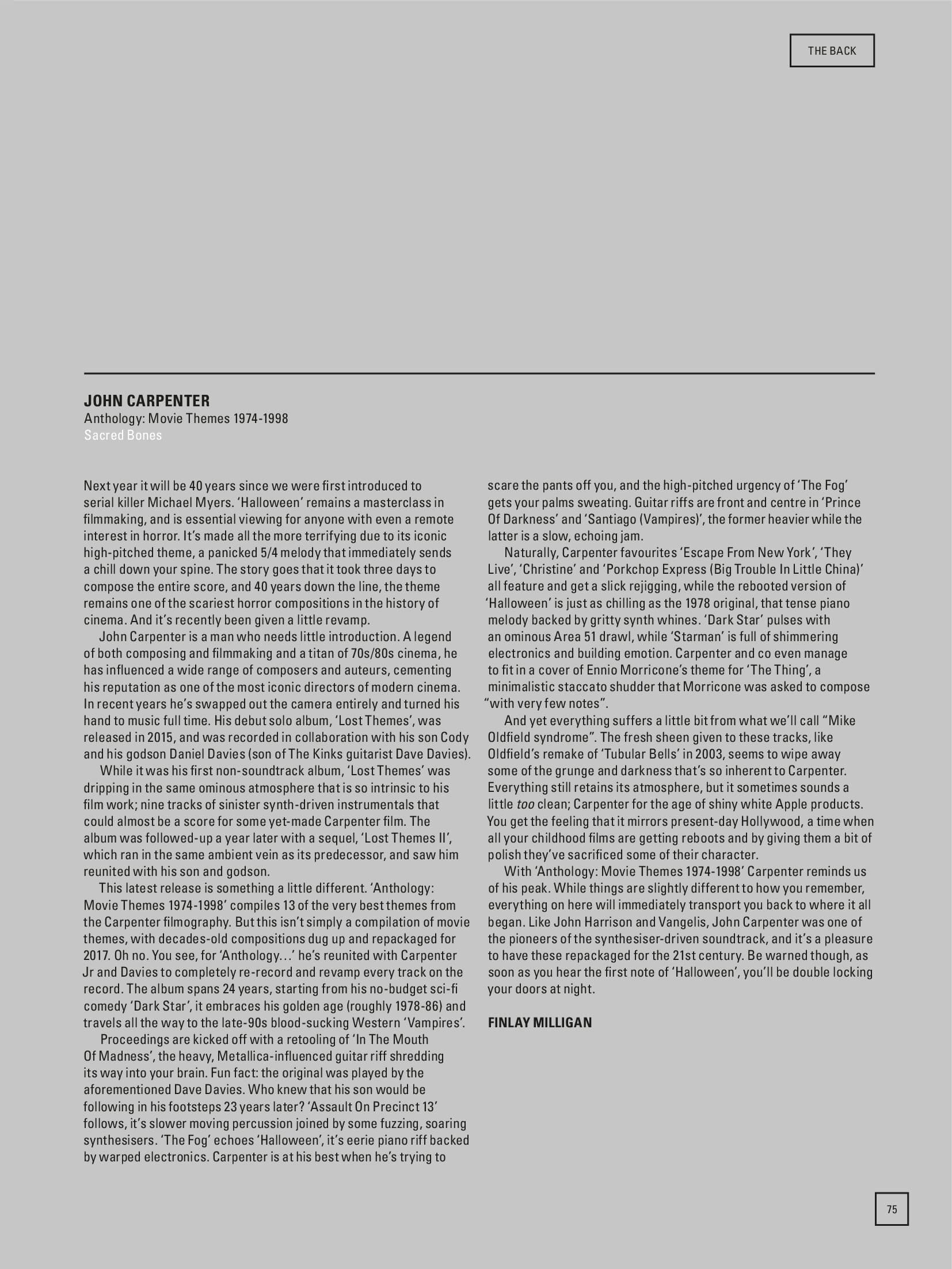
The article below from ELECTRONIC SOUND magazine (#34, October 2017) covers the evolution of science-fiction soundtracks from the Barron's to BLADE RUNNER 2049. Included is a review of a compilation of John Carpenter's film soundtracks.

Read more about the theremin HERE.


NOTE: Architect Paul Revere Williams is the same person who designed Lon Chaney's Beverly Hills home, as well as his cabin in the Sierra Nevada's.

BONUS!


A studio version of the theme from Escape From New York, one of my favorites by Carpenter.


An anthology mix of Carpenter's film music.

THE WORDS AND MUSIC OF LOUIS AND BEBE BARRON:


Bebe Barron interviewed at her home in Beverly Hills in 1997.


Forbidden Planet track, "Love At the Swimming Hole".


Academy Award winner Benjamin Burtt demonstrates how some of the sounds were created by Louis and Bebe Barron for the sci-fi film Forbidden Planet.


A short video on the music and SFX in Forbidden Planet.


An electronic composition, "Mixed Emotions", by Bebe Barron in 2000 recorded at UC Santa Barbara, California.